New Plat-Dev-210 Test Labs, Latest Plat-Dev-210 Exam Pattern

In order to meet the requirements of our customers, Our Plat-Dev-210 test questions carefully designed the automatic correcting system for customers. It is known to us that practicing the incorrect questions is very important for everyone, so our Plat-Dev-210 exam question provide the automatic correcting system to help customers understand and correct the errors. Our Plat-Dev-210 Guide Torrent will help you establish the error sets. We believe that it must be very useful for you to take your Plat-Dev-210 exam, and it is necessary for you to use our Plat-Dev-210 test questions.
We provide 24-hours online customer service which replies the client’s questions and doubts about our Plat-Dev-210 training quiz and solve their problems. Our professional personnel provide long-distance assistance online. If the clients can’t pass the Plat-Dev-210 Exam we will refund them immediately in full at one time. So there is nothing to worry about our Plat-Dev-210 exam questions. And it is totally safe to buy our Plat-Dev-210 learning guide.
>> New Plat-Dev-210 Test Labs <<
Latest Plat-Dev-210 Exam Pattern & Plat-Dev-210 Valid Test Vce Free
All these three Salesforce Certified Omnistudio Developer (Plat-Dev-210) exam questions formats offered by the PracticeTorrent are easy to use and perfectly work with all the latest web browsers, operating systems, and devices. The PracticeTorrent Plat-Dev-210 web-based practice test software and desktop practice test software both are the mock Salesforce Plat-Dev-210 Exam that will give you real-time Salesforce Certified Omnistudio Developer (Plat-Dev-210) exam environment for quick preparation.
Salesforce Plat-Dev-210 Exam Syllabus Topics:
| Topic | Details |
|---|---|
| Topic 1 |
|
| Topic 2 |
|
| Topic 3 |
|
| Topic 4 |
|
Salesforce Certified Omnistudio Developer Sample Questions (Q25-Q30):
NEW QUESTION # 25
Refer to the exhibit below.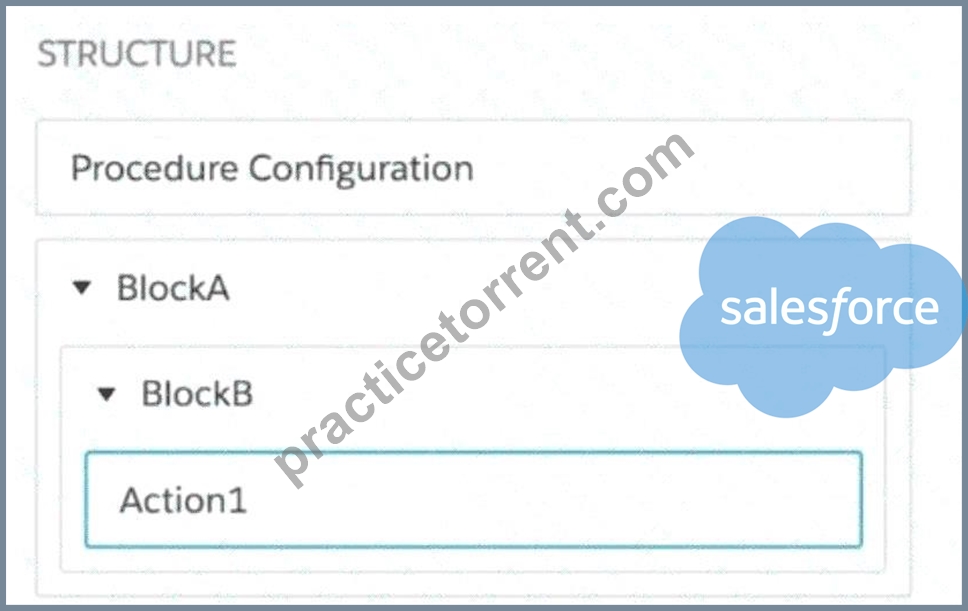
In this Integration Procedure structure, which Send JSON Path should be used to send the output of the Action1 element to a Remote Action?
- A. BlockA.BlockB.Action1
- B. Action1:BlockB:BlockA
- C. BlockA:BlockB:Action1
- D. Action1.BlockB.BlockA
Answer: A
Explanation:
In OmniStudio Integration Procedures, when you want to reference the output of an element in a nested block (e.g., for use in a Remote Action or another step), you must use dot notation that mirrors the block structure hierarchy.
In the exhibit:
Action1 is nested inside:
BlockB, which is nested inside:
BlockA
Therefore, the correct Send JSON Path to access the result of Action1 is:
CopyEdit
BlockA.BlockB.Action1
This format complies with the standard output reference syntax in Integration Procedures, which follows the pattern:
php-template
CopyEdit
<ParentBlock>.<ChildBlock>.<ActionElement>
Incorrect Options:
B. BlockA:BlockB:Action1 - Uses colons instead of dots. This is invalid syntax in JSON path resolution within Integration Procedures.
C. Action1:BlockB:BlockA - Incorrect order and invalid separators.
D. Action1.BlockB.BlockA - Incorrect order (reversed path).
Reference:
Salesforce OmniStudio Developer Guide # Integration Procedure Element JSON Pathing Best Practices for Send JSON Path # Nested Blocks and Element Referencing
NEW QUESTION # 26
Which two of these options can a developer use to retrieve data from a Salesforce object?
Choose 2 answers
- A. Lookup Input Element
- B. Data Mapper Load Action
- C. Data Mapper Post Action
- D. Data Mapper Extract Action
Answer: A,D
Explanation:
To retrieve (read) data from Salesforce objects:
A. Data Mapper Extract Action - Correct. A DataRaptor Extract is specifically used to retrieve data from Salesforce, based on input parameters or context.
C. Lookup Input Element - Correct. This is used within OmniScripts to look up a record by matching input data, essentially performing a read operation.
Incorrect Options:
B. DataRaptor Post is not a valid DataRaptor type.
D. DataRaptor Load Action is used for writing/updating data, not retrieving it.
:
Salesforce OmniStudio Guide # DataRaptor Types and Lookup Input Element Usage
NEW QUESTION # 27
Refer to the exhibit below. What is the marge code needed for this integration procedure structure to pass a CaseNumber node from the DRReadCase DataRaptor Extract Action to the HTTP Action's HTTP URL?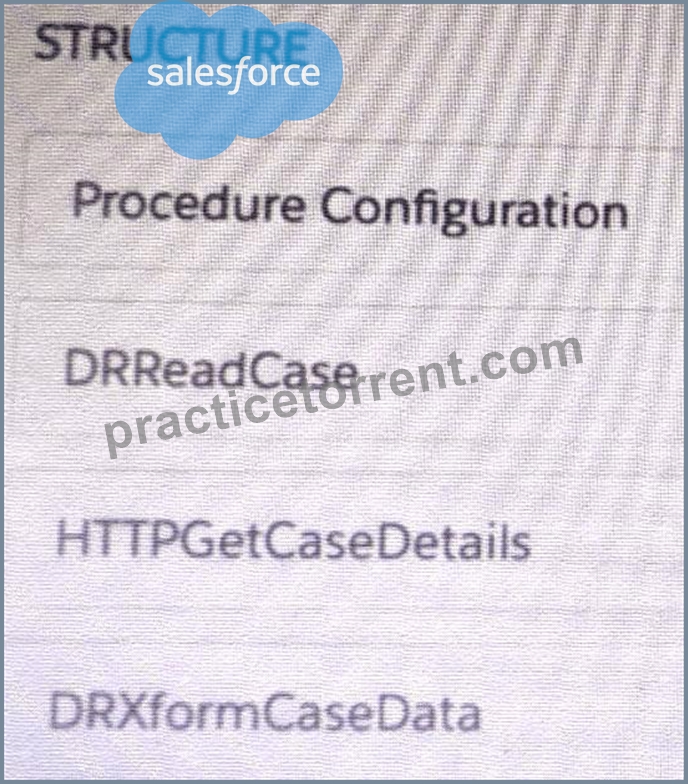
- A. MTTOPDetCaseDetail: CaseNumber%
- B. ((CaseNumber))
- C. ((DRRCase, CaseNumber))
- D. %DRReadCase: CaseNumber%
Answer: D
Explanation:
The merge code syntax for passing data from a DataRaptor Extract Action to an HTTP Action is % DataRaptorName: NodeName%. In this case, it is %DRReadCase: CaseNumber%.
NEW QUESTION # 28
Refer to the exhibit.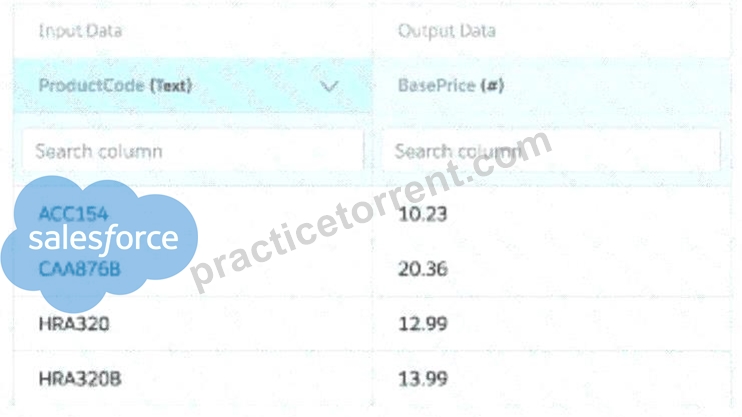
All inputs to the Calculation Matric are set correctly.
The Calculation Matrix has the following input: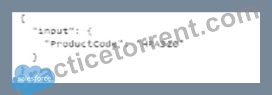
What is the output?
- A. Null
- B. 13.99
- C. 12.99,13.99
- D. 12.99
Answer: B
Explanation:
According to the Calculation Matrix Overview page, a Calculation Matrix is "a lookup table that takes an input and returns an output". In this case, the input is the ProductCode and the output is the Price. The exhibit shows a Calculation Matrix with four rows, each with a different ProductCode and Price. The input given is ProductCode: HRA3320, which matches the second row of the matrix. Therefore, the output is Price: 13.99, which is the value in the same row.
NEW QUESTION # 29
A developer needs to create a list of cases for an account in a single Datable in a FlexCard. Like the one shown below.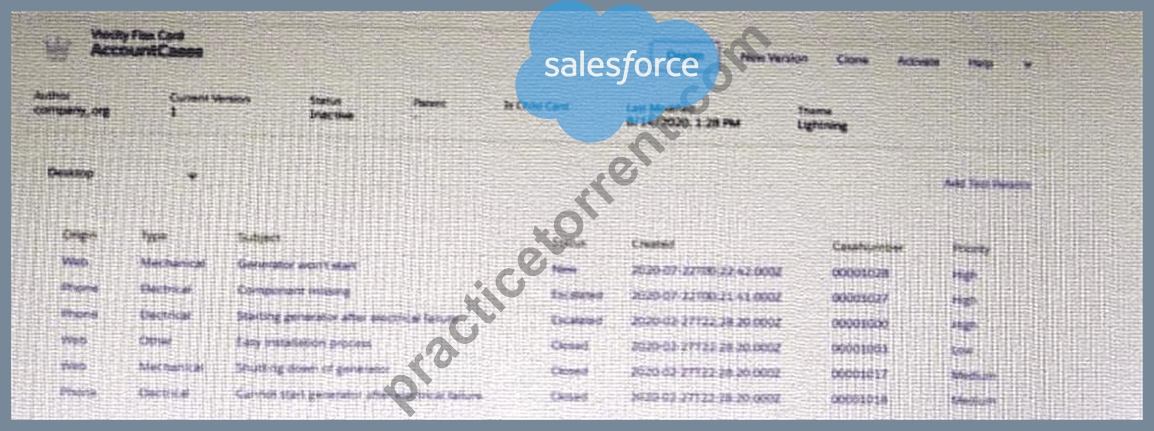
How can the developer configure the FlexCard to display the case records in this way?
- A. Enable the record Looping feature on the data table elements
- B. Select the Repeatable Mode property on the data table elements
- C. Enable the Repeat Records feature on the FlexCard Setup tab
- D. Disable the Repeat Record feature on the FlexCard setup tab
Answer: B
Explanation:
The Repeatable Mode property on the data table elements allows the developer to display multiple records in a single data table. The Repeat Records feature on the FlexCard Setup tab is used to display multiple FlexCards for each record in a data source. The Record Looping feature on the data table elements is used to iterate over a list of records and perform actions on each record. The Overwrite Target for all Null input checkbox on the Account id field is used to overwrite the existing value in the target object with null if the input value is null.
NEW QUESTION # 30
......
To ensure that the Plat-Dev-210 dumps PDF format remains up to date, the Salesforce Plat-Dev-210 questions in it are regularly revised to reflect any modifications to the Plat-Dev-210 exam content. This commitment to staying current and aligned with the Plat-Dev-210 Exam Topics ensures that candidates receive the Salesforce Certified Omnistudio Developer (Plat-Dev-210) updated questions.
Latest Plat-Dev-210 Exam Pattern: https://www.practicetorrent.com/Plat-Dev-210-practice-exam-torrent.html
- First-hand New Plat-Dev-210 Test Labs - Salesforce Latest Plat-Dev-210 Exam Pattern: Salesforce Certified Omnistudio Developer 😳 Open website ➡ www.troytecdumps.com ️⬅️ and search for ( Plat-Dev-210 ) for free download 📔Valid Dumps Plat-Dev-210 Free
- Exam Plat-Dev-210 Book 🕷 Plat-Dev-210 Pass4sure 🏔 Plat-Dev-210 Valid Test Bootcamp 🏢 Search for “ Plat-Dev-210 ” and download it for free immediately on ⮆ www.pdfvce.com ⮄ 💗Reliable Plat-Dev-210 Braindumps Ebook
- Reliable Salesforce New Plat-Dev-210 Test Labs offer you accurate Latest Exam Pattern | Salesforce Certified Omnistudio Developer 🤓 The page for free download of ➽ Plat-Dev-210 🢪 on ( www.exam4labs.com ) will open immediately 🎫Plat-Dev-210 Pass4sure
- Pass Plat-Dev-210 Exam 🐶 Valid Plat-Dev-210 Cram Materials 🦡 Plat-Dev-210 Reliable Torrent ⭐ Search for “ Plat-Dev-210 ” and download exam materials for free through ⏩ www.pdfvce.com ⏪ 👘Plat-Dev-210 Valid Test Bootcamp
- Pass Guaranteed 2026 Salesforce Plat-Dev-210 –Trustable New Test Labs 🟣 Easily obtain free download of ⮆ Plat-Dev-210 ⮄ by searching on 《 www.prepawaypdf.com 》 🚚Free Plat-Dev-210 Vce Dumps
- Plat-Dev-210 Latest Exam Vce 🧐 Plat-Dev-210 Trustworthy Source 🗻 Plat-Dev-210 Pass Guarantee 🍣 Search for ➡ Plat-Dev-210 ️⬅️ and easily obtain a free download on “ www.pdfvce.com ” 🤠Pass Plat-Dev-210 Exam
- First-hand New Plat-Dev-210 Test Labs - Salesforce Latest Plat-Dev-210 Exam Pattern: Salesforce Certified Omnistudio Developer 😲 Search for 《 Plat-Dev-210 》 and easily obtain a free download on ⮆ www.testkingpass.com ⮄ 📮Latest Plat-Dev-210 Exam Forum
- Authoritative Salesforce New Test Labs – High Hit Rate Latest Plat-Dev-210 Exam Pattern 🥕 Easily obtain ⏩ Plat-Dev-210 ⏪ for free download through “ www.pdfvce.com ” 💁Study Plat-Dev-210 Material
- 100% Pass Quiz Marvelous Salesforce New Plat-Dev-210 Test Labs 😫 Open 「 www.prep4away.com 」 enter [ Plat-Dev-210 ] and obtain a free download 🙀Reliable Plat-Dev-210 Braindumps Ebook
- Reliable Plat-Dev-210 Braindumps Ebook 😏 Plat-Dev-210 Reliable Torrent 😁 Valid Dumps Plat-Dev-210 Free 🍾 Open ➥ www.pdfvce.com 🡄 enter 「 Plat-Dev-210 」 and obtain a free download 🗜Free Plat-Dev-210 Practice Exams
- Quiz Salesforce - Trustable New Plat-Dev-210 Test Labs 💥 Simply search for ⮆ Plat-Dev-210 ⮄ for free download on ▶ www.pdfdumps.com ◀ 🛰Exam Plat-Dev-210 Book
- www.stes.tyc.edu.tw, www.stes.tyc.edu.tw, www.stes.tyc.edu.tw, www.stes.tyc.edu.tw, www.stes.tyc.edu.tw, blogfreely.net, bbs.t-firefly.com, www.stes.tyc.edu.tw, www.stes.tyc.edu.tw, a1ta.ca, Disposable vapes
Tags: New Plat-Dev-210 Test Labs, Latest Plat-Dev-210 Exam Pattern, Plat-Dev-210 Valid Test Vce Free, Plat-Dev-210 Test Assessment, Plat-Dev-210 Study Center


